ELECTRIC UFH PROS
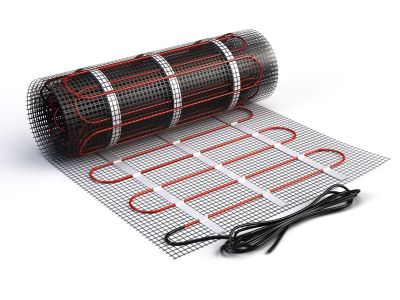
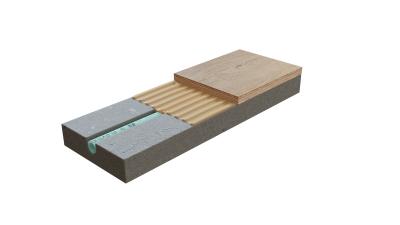
Electric UFH can be sourced and installed by private companies or can even be found and purchased directly from your local DIY retailer. This can be appealing due to the low purchase and installation costs. They also have the added benefit of being low profile, so floor build up is kept to a minimum. Premium quality UFH electric heating mats can be more robust and are capable of excellent heating output. Electric UFH can be very suitable for small areas of up to 10m2, such as en suite / bathroom areas (non-primary living spaces).
ELECTRIC UFH CONS
Overall running costs of electric UFH is considered to be the major disadvantage. For this reason, electric UFH is only normally considered when installing into small or tricky areas rather than the entire house. Reliability of electric systems can also be a concern. In most online reviews or feedback, UFH is given a rough time, with the focus often being on bad user experiences due to unreliable systems. Although electric systems are cheaper to install when compared with a hydronic system, the money saved on the initial installation will soon be spent on sizeable energy bills. To heat the same space to the same temperature using electric UFH would cost at least three times as much as using water UFH with a gas boiler. Running costs are manageable when the system is installed into small areas (up to 10m2) and not used as primary heat source and/or not installed into primary living areas such as kitchens, lounges, etc.
WATER UFH PROS
The main advantage is the overall running cost once the system has been installed. Lower costs are achieved by taking the water used in the current central heating system that normally supplies radiators. As water UFH uses lower water temperatures, this not only shaves a percentage off your overall energy bill, it is also proven to be up to 25% more efficient than using radiators when paired with a modern condensing boiler. Individual zoning (multiple room thermostats) allows you to control UFH with a greater level of detail and increases efficiency and level of comfort. Another major advantage of water UFH is its ability to be paired with renewable technologies such as Ground/Air Source Heat Pumps and PV/Solar Thermal. Water UFH is mostly installed as a primary heat source throughout your premises and removes the need for radiators.
WATER UFH CONS
Water systems have a higher installation cost than electric installation because of the materials used, such as the manifold, circulation pump and UFH pipes. There are some concerns about pipes bursting, however, most providers of UFH will guarantee their pipework for 50-100 years, as pipe material is extremely durable. They are commonly known as PE-RT or PEX, which are multi layered pipe products. Another initial drawback can be that most companies do not, or are not allowed to provide the “full” installation. This means that though they often design, supply and install the actual underfloor heating system, most systems still need to be connected to the main central heating system by a local heating engineer / plumber / electrician, who then supply and fit wiring centres and room stats.