
Cast floors with underfloor heating
Cast floors are seamless floor finishes that consist of one homogeneous layer. They not only offer a modern and sleek look, but also form an excellent combination with underfloor heating systems. This is because the uniform structure of cast floors ensures that the heat is distributed evenly and there is minimal heat resistance, which means that cast floors can quickly heat up.
Which type of cast floor is most suitable for underfloor heating?
The most common types of cast floors are made of epoxy, polyurethane (PU) and concrete. Each type of cast floor has its own properties and therefore they also differ in terms of suitability for an underfloor heating system.
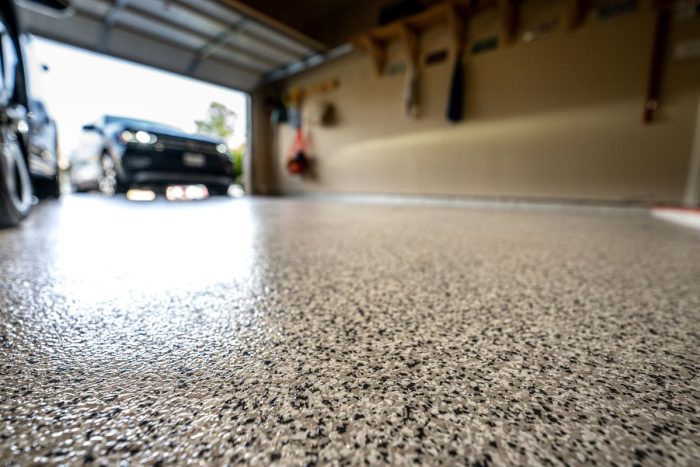
Epoxy cast floors: Epoxy cast floors are made of synthetic resin and are very durable. This type of flooring is therefore often chosen for areas with intensive foot traffic or commercial areas where machines are used. Epoxy poured floors have a very good thermal conductivity, so that they heat up quickly and can spread the heat evenly. They are therefore also very suitable for underfloor heating.
Polyurethane (PU) cast floors: PU cast floors are known for their elasticity, hygiene and comfort. The elastic properties ensure that the floor is comfortable to walk on and some PU floors also contain anti-slip properties, reducing the risk of slipping. This type of floor is therefore often used in medical areas, for example. PU cast floors are very suitable for underfloor heating because of their flexible nature. As a result, they can better absorb temperature changes, which reduces the risk of cracks.

Concrete cast floors: Concrete floors are popular because of their sleek and industrial look and are used in both commercial and non-commercial spaces. Concrete floors have a reasonable heat conductivity, but less efficiently than with a PU or Epoxy poured floor. Concrete has a higher thermal resistance, which means that it heats up less quickly and spreads the heat less evenly, but that does not mean that a concrete floor is unsuitable for underfloor heating. However, it is important to take into account that the concrete floor, for example, has the right thickness to enable good heat transfer. It is advisable to seek advice from experts in this field before making a final decision.
Activating underfloor heating after installing a cast floor
After a new cast floor has been laid, it is important not to immediately switch on the underfloor heating. Depending on the type of cast floor, the floor needs about fourteen days to harden. Below is a step-by-step plan:
- Waiting time: Give the cast floor time to harden, this is usually about fourteen days but can differ per type of floor. Therefore, always follow the recommendations of the cast floor expert or manufacturer.
- Gradual heating: Once the waiting time has elapsed, the underfloor heating system can be switched on. Turn it on at a low temperature and no higher than 25 degrees Celsius.
- Increase temperature: After a few days, the temperature can be gradually increased, usually by about 5 degrees Celsius every few days. This process can take several weeks until the desired temperature is reached.
It is important to go through the step-by-step plan carefully to avoid problems such as deformations, cracks, delamination or other damage to the floor. Self-levelling floors need time to fully harden and stabilise before being exposed to heat.
Cast floor maintenance in combination with underfloor heating
To ensure that the cast floor remains good for a long time, it is important not to let the floor heat up or cool down too quickly. It is best to increase the water temperature by five degrees every 24 hours until you have reached the desired temperature and never set it higher than 40 degrees. When cooling down, the same process can be used with the same length of time.