
Underfloor Heating Manifolds Explained — and Why Trusted Knowledge Matters
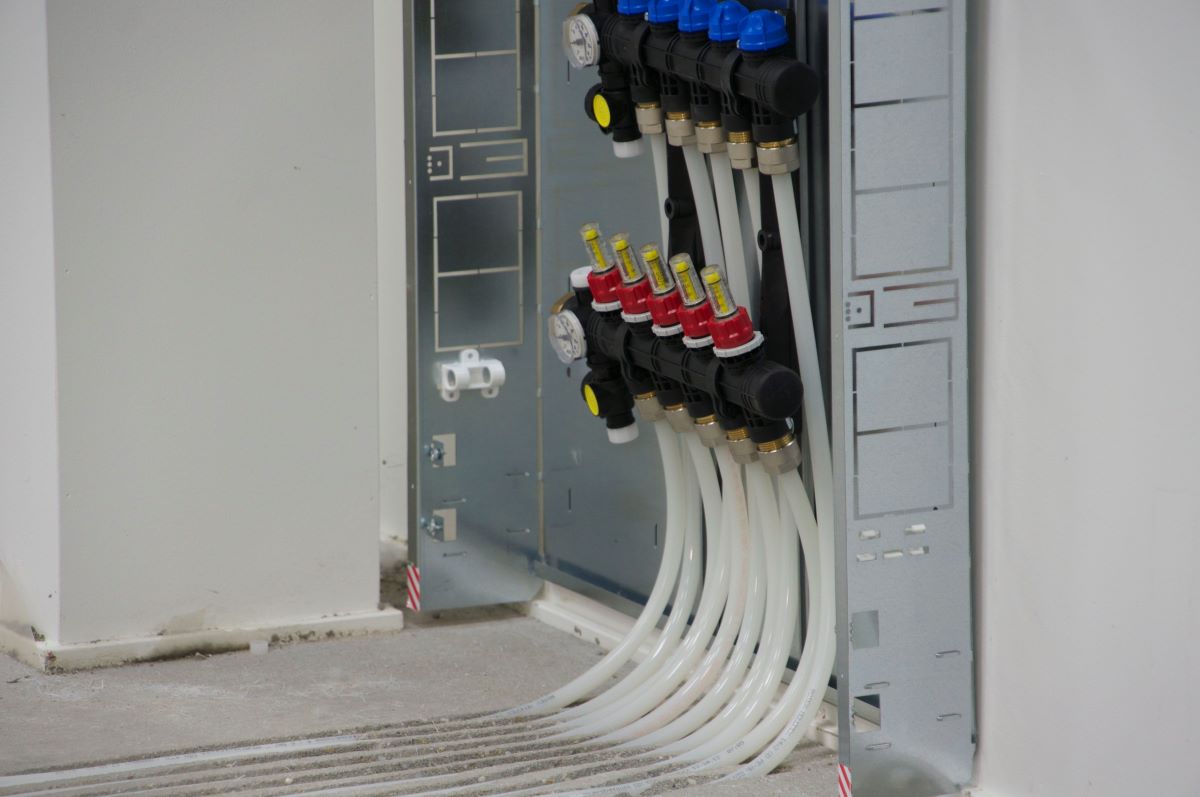
When it comes to warm water underfloor heating (UFH), one component plays a bigger role than most people realise: the manifold. It’s the heart of the system, quietly working in the background to make sure heat is delivered evenly, safely, and efficiently.
Our team recently contributed to a feature in Build It’s Self Build – Home Energy & Renewables exploring how UFH manifolds work. In this article, we’ll share some of the key insights from that article and explain why we’ve positioned ourselves as a trusted source of knowledge for builders, architects, heating engineers, and anyone working in the wider construction sector who wants to get the best results from underfloor heating.
What a UFH Manifold Actually Does
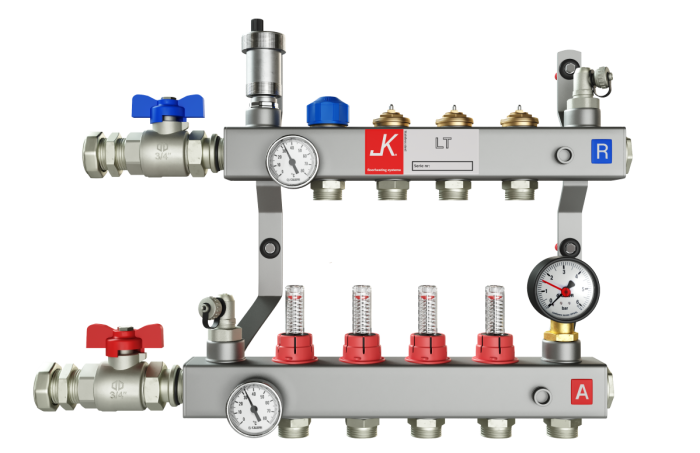
If you think of a UFH system as a network, the manifold is the hub. It distributes warm water from the heat source into multiple loops of pipework laid beneath the floor. Each loop might serve a single room or part of a larger space, and the manifold ensures every loop receives the right flow.
It also regulates the temperature. Because water from the boiler or heat pump is often hotter than the floor can safely handle, the manifold mixes it down to a controlled level — usually between 35 and 60°C. This prevents damage to flooring and avoids the problem of overheated spaces.
Crucially, the manifold allows zoning. That means one room can be warm and cosy while another is cooler, all controlled independently. For homeowners, this means flexibility and comfort. For professionals, it means delivering systems that meet modern expectations for efficiency and control.
Getting Design and Installation Right
The success of a UFH system often depends on the details, and the manifold is no exception. Positioning matters — it should be as central as possible to the areas it serves, ideally on the same floor, and in a location that’s easy to access later for maintenance. Clear labelling of each loop is another small but vital step, making it simple to identify which circuit serves which space in the property.
Commissioning is equally important. That means pressure testing, bleeding air from the system, and balancing the loops so that shorter circuits don’t steal flow away from longer ones. When these steps are carried out properly, the system runs smoothly.
Why Sharing Knowledge Matters
One of the challenges in UFH is that it crosses so many disciplines. Heating engineers, architects, builders, and flooring specialists all have a role to play, but each comes at the system from a slightly different perspective. Without shared knowledge, it’s easy for misunderstandings to creep in — and those small gaps in understanding can lead to systems that don’t perform as well as they should.
That’s why we see our role as more than just providing products or technical input. We want to act as an information hub for the whole industry. By breaking down concepts into clear explanations, highlighting best practice, and sharing insights from across different disciplines, we help to make it easier for professionals to make informed decisions. Whether it’s understanding how a manifold works, choosing the right controls, or planning long-term maintenance, having a reliable source of information saves time, reduces mistakes, and leads to better outcomes and higher standards.

Underfloor heating is growing rapidly, especially as more projects move towards low-temperature heat sources like heat pumps. For this growth to be sustainable, knowledge needs to be shared widely. Our mission is to make sure builders, architects, heating engineers, and others in the construction supply chain have access to the guidance they need — not just to get systems working, but to get them working brilliantly.
So whether you’re designing a new build, retrofitting a period property, or troubleshooting an existing installation, we’re here to support you with clear, practical advice. The manifold might be the heart of a UFH system, but good information is what keeps the whole industry flowing smoothly.
Looking to dive deeper? Explore our UFH resources or get in touch with our team to discuss your next project.